First word on the fascia
Brakes
BRAKES is painted across the front of the building before anything else. Pads, rotors and a proper ABS sensor diagnosis, not a parts swap until the light happens to clear.
What the pedal is actually telling you
A pulsing pedal and a spongy pedal are two different problems, and mixing them up wastes money. A pulse under braking, especially one that shows up going downhill or coming off the highway, is almost always a warped or uneven rotor putting a wobble into the caliper. A spongy pedal that sinks slowly toward the floor points somewhere else entirely, usually air or moisture in the line or a caliper that isn't releasing clean. We road test before we quote, because guessing from the driver's seat gets those two backwards more often than people expect.
Diagnosing the ABS light instead of chasing it
An ABS light on the dash sends a lot of vehicles straight to a parts counter for a sensor nobody has actually tested. We pull the code and check the wheel speed signal at the hub before anything gets ordered, because a dirty tone ring or a damaged wire reads the same as a failed sensor until someone checks. Diagnosing a faulty ABS sensor properly, rather than replacing parts on a guess, is work we do in house.
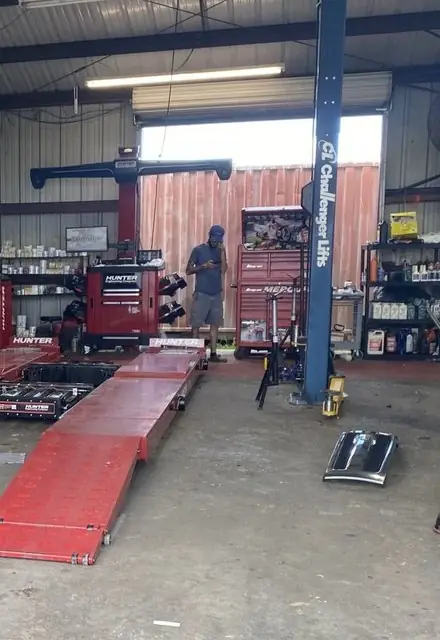
Bailey's Tire Service, brakes, on our own lift, on our own floor. Call (985) 876-5082.
What humidity does to brake hardware down here
South Louisiana humidity and standing water in the parish do more to a set of calipers than most drivers realize. Slide pins seize inside their boots when moisture gets past worn rubber, and a caliper that can't slide evenly drags one pad down faster than the other, which is why a set can come in wearing unevenly even when the driving hasn't changed. We check slide pin movement and boot condition on every brake job, not just the pads and rotors.
Rotors rust fast when a truck sits in a wet yard or a flooded lot between drives. A thin surface rust wipes off the first time the pedal gets used hard, but a rotor that's sat long enough can pit deep enough to groove a new pad within a few thousand miles. We look at rotor surface condition before we decide whether a resurface or a replacement is the right call, rather than defaulting to one.
Hardware clips and shims corrode quietly under the pad long before the pad itself is worn out, and a corroded clip is a common cause of a brake that squeals only in damp weather. We replace hardware with the pads as a matter of course here, because reusing rusted clips on new pads is a callback waiting to happen in this climate.
Parking brakes get the same attention, not just the pedal. A cable that's been sitting seized under a truck that never sees a hill will bind up quietly, and the first sign is usually a dragging rear wheel or a burning smell nobody can place. We work the cable free and check the adjuster before we call a brake job finished, because a parking brake that only half releases wears a rotor from the inside out even while the hydraulic side looks perfect.
Fluid matters as much as the parts. Brake fluid pulls moisture out of the air over time, and moisture in the line lowers the boiling point right when a hard stop needs it most. A pedal that feels fine on a cold morning and goes soft after a long downhill run is often telling you the fluid, not the pads, is due. We check fluid condition on every brake visit and flush it when the color or the feel says it's time, rather than leaving it to guesswork.